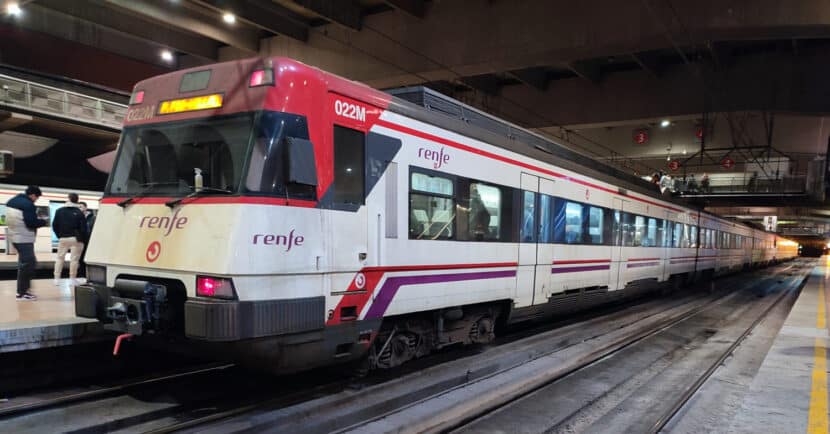
A strike called by the SF-Intersindical union is set for 15 July. If you are planning to travel by train, there is still plenty of scope to do so as normal. Spain’s Ministry of Transport has already set minimum service levels that maintain a substantial share of rail services nationwide.
What trains will run
These are the guaranteed service levels:
- Cercanías (commuter rail): 75% at peak times and 50% for the rest of the day, making it a solid option for getting around cities such as Madrid.
- Medium Distance (Avant, Regional, Regional Exprés, and Media Distancia): 66% of the usual timetable, with 426 trains running out of the 650 scheduled.
- High-Speed and Long Distance: 73% of services, with 249 trains guaranteed out of 343.
In practice, this means that while there may be occasional adjustments or cancellations, the rail network will operate largely as normal. Most, if not all, high-speed and long-distance services are expected to run.
What travellers can expect
If you are travelling, it is likely that:
- Renfe will offer alternatives if your high-speed or long-distance train is affected.
- Cercanías will remain a reliable option, although only minimum services will be in place.
There is also an important reference point: during the last strike called by the same union (29 June), participation was very low, at just 1.83%. As a result, services ran almost normally.
Trainvelling tips
If you plan to travel that day:
- Check your train in advance via the Renfe app or website.
- Arrive at the station with a bit of extra time.
- Consider alternatives to Cercanías where possible.
Rail remains one of the most sustainable and comfortable ways to travel, even on days like this. With a little planning, your journey can be just as smooth as usual.