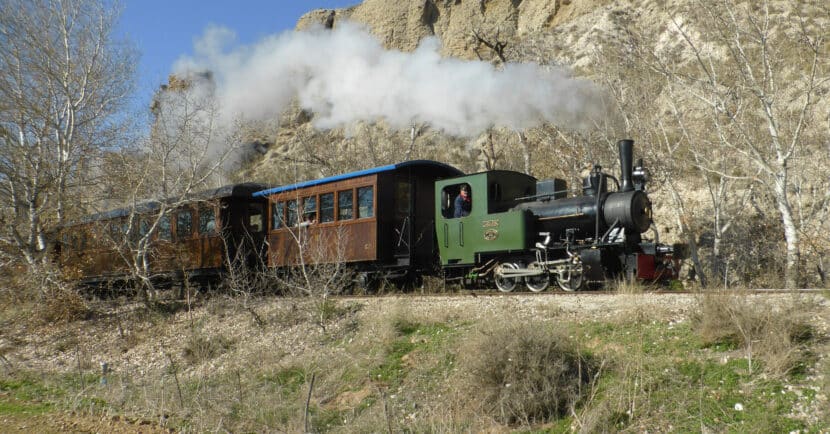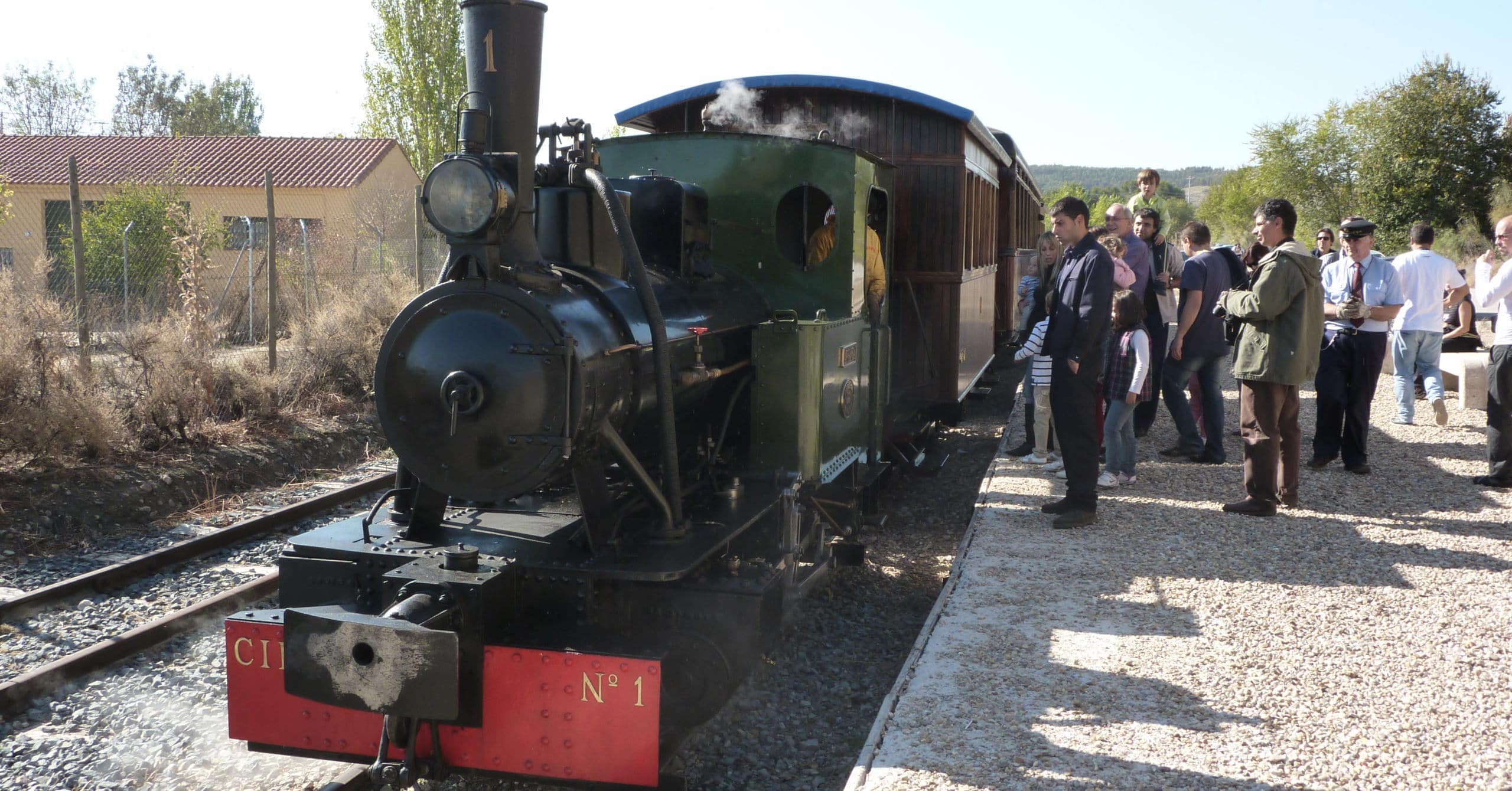
The Arganda Train or Tren de Arganda, one of the most emblematic tourist trains in the Region of Madrid, offers you a journey back in time aboard authentic vintage wooden carriages powered by a steam locomotive. Just a few kilometres from the capital, this heritage railway maintains part of the original route of the old Tajuña Railway, offering a unique experience for those who enjoy railway tourism, nature and living history.
Riding the Tren de Arganda means leaving the rush behind and enjoying the journey once again.
The scenery is like something out of a Western film. All at a leisurely pace, with the whistle of the steam and the classic rattle that make this excursion an ideal plan with family or friends.
Travelling on this train is not just about moving on rails: it is about feeling the excitement of the past at every station, discovering an amazing natural environment and enjoying one of the most endearing railway experiences near Madrid.
The route
The route of the Arganda Train is short, but brimming with history, landscape, and emotion.
The train departs from La Poveda station, in Arganda del Rey, and runs for 3.5 kilometres along the old Ferrocarril del Tajuña, inaugurated in 1886. On board, you’ll be taken on a journey back in time, where time is measured to the rhythm of steam and the rattle of the wooden carriages.
Just a few minutes after departure, the train reaches its most spectacular point: the Jarama Metal Bridge, an impressive 175-metre-long structure – the longest preserved in the Community of Madrid – from which you can enjoy a unique panoramic view of the river and its natural surroundings.
The route continues along the majestic Cantiles del Pil, ochre-coloured rock formations reminiscent of landscapes from the Far West, until it reaches the Laguna del Campillo halt. This protected area is home to a rich diversity of fauna and flora. Here the steam stops, and the silence of nature takes centre stage.
In total, the journey takes about 45 minutes there and back, with an average speed of 15 km/h: the perfect time to enjoy the scenery, the sound of steam and the magic of one of Madrid’s most charming tourist trains, the only one with steam traction!
At Laguna del Campillo station, you will see the reversing manoeuvre. The locomotive changes from one end of the train to the other to start the return journey to La Poveda. Always with the characteristic speed of the Tren de Arganda, which whistles more than it runs.
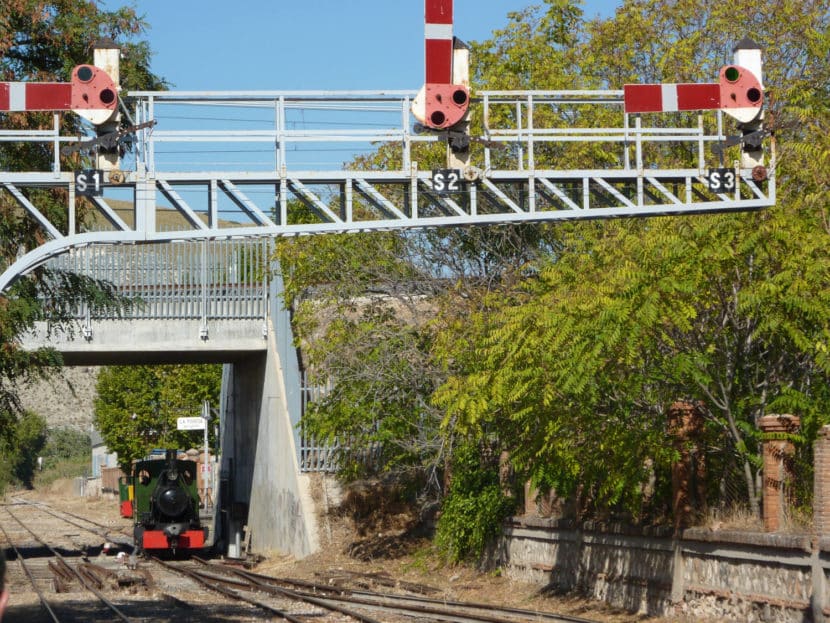
There is a small railway museum at La Poveda station. And from the station platforms, you can take a shuttle train to the modular model railway.
How to get to the Arganda steam Train?
La Poveda Train Station is located at the junction of the M-300 road with Avenida de la Depuradora, in Arganda del Rey. On Google maps it can be found as “Estación-Museo del Tren de Arganda”.
By public transport you can walk from La Poveda metro station, which is only 750 metres away (less than 10 minutes walk).
Dates and times in 2026
The 2026 spring season of Tren de Arganda starts on Sunday 29 March and ends on Sunday 31 May. Trains are scheduled to run every Sunday and the first two Saturdays in April and May:
- March: 29.
- April: 4, 5, 12, 17, 19 and 26.
- May: 2, 3, 10, 17, 24 and 31.
- June: 6, 7 and 14.
The autumn season will last from October to December.
Trains leave La Poveda at 10:00, 11:00, 12:00 and 13:00 and return to La Poveda 40 to 45 minutes later.
Tickets and reservations
The rates during the two seasons are as follows:
- Return trip to Laguna del Campillo, with visit to the museum: 10,00€.
- Children under 3 years old: free if they do not occupy a seat.
- Shuttle train and visit to the modular model railway: 3,00€.
History of the Arganda Train
The Tren de Arganda is a heritage narrow-gauge railway that was inaugurated on 30 July 1886, connecting Madrid with Arganda del Rey and other towns in the southeast of the Madrid region. Its official name was the Ferrocarril del Tajuña.
It was created to transport gypsum and limestone from the area to Madrid, but soon became popular for mixed passenger and freight transport. The line had an original route of around 27 kilometres and was eventually extended to Guadalajara.
The train left from a station near the Hospital del Niño Jesús, passing through places such as Vicálvaro, La Poveda and Arganda, serving areas that had previously been mainly agricultural and contributing to their economic and social transformation. It was the first narrow-gauge railway in Madrid, marking an important technological leap that brought the southeast of Madrid into the contemporary era with strict timetables and better connections with the capital.
Over time, the service declined, largely due to its slow speed. The saying of the Tren de Arganda is well known , that it whistles more than it runs. It remained active until the 1990s. However, the Community of Madrid preserved a section for its conservation as a tourist train. Since 2001, it has been running as a historic train between La Poveda and the Campillo lagoon, with restored steam locomotives, recovering the railway memory of the area and promoting cultural tourism.
This train was not only a means of transport, but also a symbol of modernity and regional development, whose legacy is kept alive through museums and railway preservation activities in the area.
News from the Arganda Train
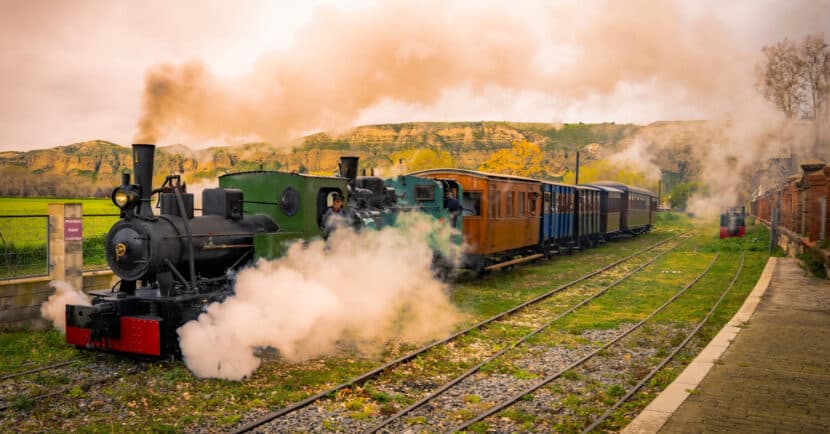
The Arganda Train kicks off its 2026 season on 29 March